What the Wheel Doesn’t Tell You: An Access Audit for UK Pottery Studios

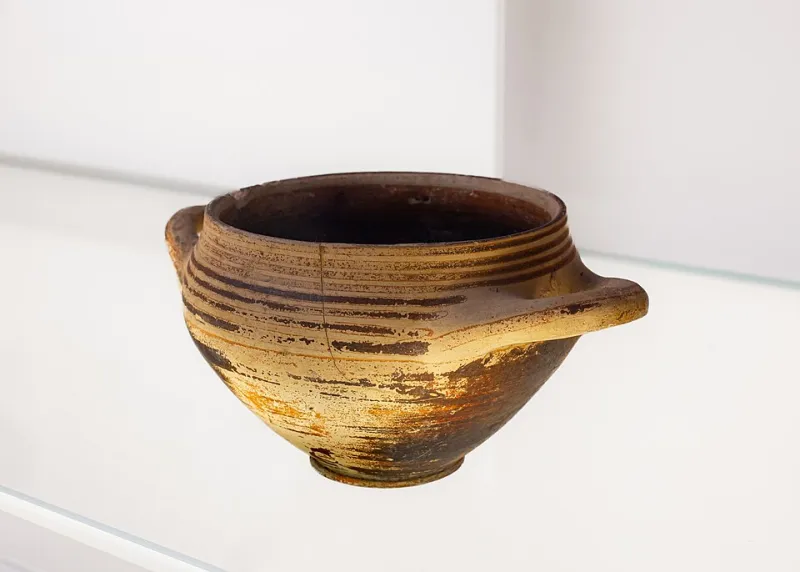
Photo: TTCTransportationFan4644, CC BY-SA 4.0, via Wikimedia Commons
Pottery classes are often sold as the ultimate low-faff creative escape: turn up, get muddy, make a mug. But for disabled potters, the barriers can start long before the clay hits the wheel. A step-free entrance is a good beginning, not the whole story. Access in a studio is a web of heights, reaches, sounds, smells, door widths, seating, toilets and whether anyone has actually thought about the person on the other side of the booking form.
This is not about blaming every village hall with a kiln in the cupboard. Most UK pottery studios are small, scrappy and run by people who genuinely want people through the door. But good intentions need a tape measure and a checklist. Here’s what to look at—and what to ask.
The room before the wheel
Start outside. A studio can have the best adjustable wheel in the country and still fail at the front door. Converted mills, railway arches and church halls are charming, but they often come with cobbles, narrow corridors, heavy fire doors and a loo up a flight of stairs. Ask for the actual clear opening width of the main door, not just whether there’s a ramp. A standard wheelchair needs more than a gesture; 850mm clear opening is a useful benchmark, and level thresholds matter as much as gradients.
One disabled potter I spoke to in West Yorkshire described booking a taster session after seeing ‘accessible’ on a website, then arriving to find the accessible toilet was being used as a glaze store. ‘I spent the whole two hours worrying about the journey home,’ she said. ‘The clay was lovely. The logistics were not.’
That’s the first audit lesson: access information should be specific and current. A photo of the entrance, the route from the car park, the toilet and the studio floor is worth more than a thousand words of optimism.
Height is a design choice, not a fixed fact
Wheel throwing is often treated as a standing-up job. It isn’t. It’s a seated job for many potters, and a standing job for others, and a sometimes-one-sometimes-the-other job for plenty more. The problem is that standard wheels and benches are frequently set for one body shape, one height and one way of working.
A wheel head that sits too high forces the shoulders up; too low and the back rounds. For wheelchair users, the crucial detail is clearance underneath—legroom, a splash pan that doesn’t block knees, and controls that can be reached without twisting. For seated potters using a stool, the wheel needs to meet them, not the other way round. Adjustable wheel stands, raised plinths and simple blocks can transform a session. So can a table that goes down as well as up.
‘I can throw if the wheel is right,’ one potter in Bristol told me. ‘I can’t if I have to perch like a garden gnome and hope for the best.’
Wedging, hand-building and glazing have the same issue. A slab roller set at waist height is a delight; one set at knee height is an obstacle course. Shelves that need a long reach, sinks you can’t get close to and tools kept in a deep drawer all quietly decide who can take part.
Seating, standing and the long hour
Pottery is slow. A two-hour class involves a lot of standing, sitting, leaning and waiting. Backless stools, hard benches and anti-fatigue mats that curl at the edges are not neutral design choices. Some potters need back support. Some need to alternate between sitting and standing. Some need arms on a chair, or a perch stool, or simply the option to bring their own cushion.
Ask whether seating can be adjusted, and whether there is space to move it. A crowded studio with three centimetres between wheels is not accessible, even if every wheel is the right height. People need room to transfer, to park a walking aid, to stretch or to leave without climbing over someone’s toolkit.
Sensory load and the quiet corner
Access is not only physical. Clay dust, extractor fans, hand dryers, fluorescent lighting, strong glazes and the general clatter of a busy studio can overwhelm. For autistic potters, people with sensory processing differences, or anyone having a low-energy day, a quiet corner or a known low-sensory session can be the difference between joining in and going home.
A cheap fix is to publish a sensory description: how loud it gets, what it smells like, whether there are flickering lights, how many people are usually in the room. Another is to offer a pre-visit during a quiet hour. You don’t need a spa room. A corner with a chair, a clear view of the door and permission to step out is a start.
What studios can fix without a lottery grant
Plenty of access improvements are unglamorous and cheap. Measure the doorway. Clear a 1.5m turning circle near the sinks. Buy one adjustable stool. Lower one table. Move the tools from the top shelf to the middle. Label the accessible route from the car park. Put the access info on the booking page, not buried in a PDF. Ask every new potter whether they have access needs, and mean it when you ask.
More expensive changes—a level entrance, a hoist, a fully accessible toilet—may need funding and proper advice. But the first step is an honest audit. Walk the route yourself with a tape measure, a notebook and someone who isn’t you.
Questions to ask before you book
- Is the route from the street or car park step-free, and is the surface firm?
- What is the clear width of the studio door and any internal doorways?
- Is there an accessible toilet, and is it kept free of storage?
- Can the wheel height be adjusted, and is there legroom underneath?
- Are tables and work surfaces adjustable or available at different heights?
- What seating is provided, and can I bring my own support or cushion?
- Is there space to park a wheelchair, walking frame or buggy?
- Can I bring a support worker or assistant, and is there a cost?
- Is there a quiet space or a low-sensory session?
- How many people are usually in the class, and how close are the workstations?
- Can I visit before booking to check the space?
- What happens if the access I need isn’t available on the day?
A studio that answers these questions clearly is already ahead. One that says ‘we’ll figure it out’ might still be fine—but you deserve to know what you’re walking into. The wheel doesn’t tell you any of this. The audit does.