Forty-Five Minutes of Mud: The Rise of the Lunch-Break Pottery Session

Photo: hands throwing clay on pottery wheel in bright studio, apron, morning light, via c8.alamy.com
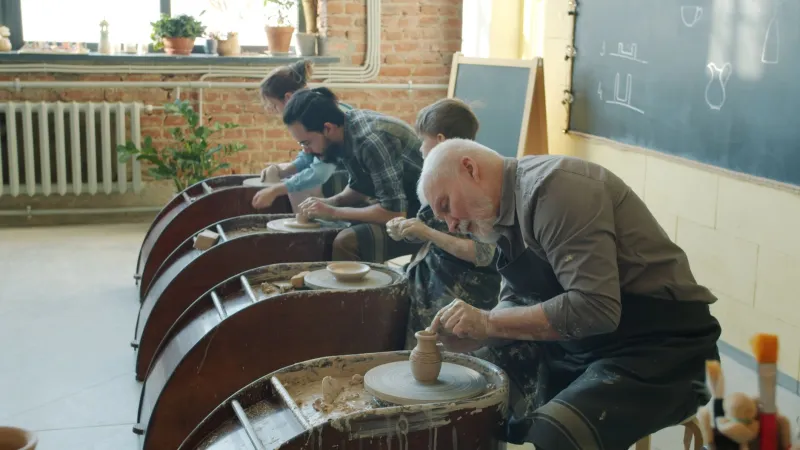
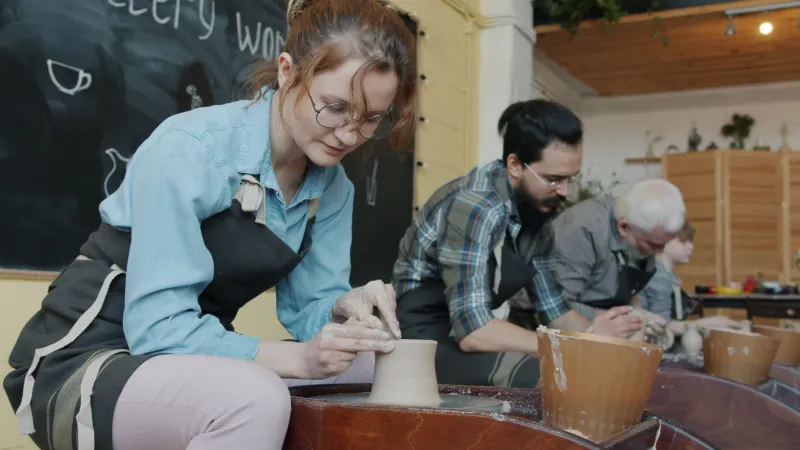
It's 12:40 on a Tuesday somewhere in Ancoats, and twelve adults in aprons are trying to centre 500g of buff stoneware before their next meeting. Nobody is talking about glaze chemistry. Two of them have a hard stop at half one. This is the lunch-hour pottery session, and it has quietly become one of the fastest-growing slots on the UK studio timetable.
The logic isn't hard to follow. If you're in the office two or three days a week, the old model of a ten-week evening course starts to look greedy. You can't commit to Wednesday nights for three months when Wednesday nights are the only time you see your flatmates. What you can commit to is the gap between a morning of calls and an afternoon of calls — a gap that is, crucially, in the middle of the day and entirely your own.
The Window Is the Teacher
Studios have responded with a menu of short-format sessions: express wheel tasters, hand-building drop-ins, "make one bowl" slots. Most run 45 to 60 minutes, sit somewhere between £15 and £30, and usually include clay, tools, an apron, bisque firing and a glaze finish on a single small piece. You turn up, you get your hands wet, you leave. Somebody else handles the clean-up and, mercifully, the kiln.
The best of them are booked by the seat rather than the term, which makes them genuinely drop-in-able. The worst of them are just an evening taster with the clock moved forward and the demo rushed — so it's worth reading the listing properly. If it doesn't tell you how many pieces you keep, whether firing is included, and how long the turnaround is, ask before you pay.
What You Can Actually Make in 45 Minutes
The honest answer is: less than you think, and better than you'd expect. Clay has its own schedule and it doesn't read calendars. Wedging eats three or four minutes before you've made anything at all. Centring a ball of clay takes longer than it does for the person on Instagram. And you need a good ten minutes at the end to wipe down your wheel, sort your tools and get the mud out from under your nails.
Which leaves you roughly half an hour of actual making. Within that, these forms earn their keep:
- Pinch pots. Cheap on time, forgiving of shaky hands, and you can knock out two or three small ones that look intentional as a set.
- Hump-moulded or press-draped bowls. A ball of clay, a plaster hump or a wooden form, and a bit of patience. Very few decisions to make.
- Slab dishes and trinket trays. Roll, texture, fold, done. A rolling pin and a bit of netting will get you a decent little dish in fifteen minutes.
- Textured tiles. Good for testing a stamp or a sprig mould, and they don't care if they're wonky.
- Small coiled pots. Only if you're comfortable — coiling is meditative but it does not hurry.
The forms that fight a lunch break are the ambitious ones. Handles need leather-hard timing. Trimming needs a pot that's dried to just the right point, which is never the same afternoon. Jugs, teapots and anything with a spout are a different hobby entirely.
The Trimming Problem
Most lunchtime wheel sessions solve this by simply having you throw something small and thick-ish and leaving the turning to studio staff or a follow-up session. That's a perfectly good arrangement, but check it before booking. If trimming and glazing require a second visit, budget for it in both money and diary space. Some studios roll the return visit into the original price; others charge it as a separate glaze session. Neither is unreasonable — it's just the sort of thing you want to know before you've told your manager you'll be back by two.
The Practical Limits Nobody Mentions in the Listing
A few things worth knowing before your first lunchtime throw:
Don't book back-to-back. Fifteen minutes is not enough time to wash your hands, get the clay off your forearms and stop smelling faintly of iron. Give yourself a cushion, or accept that your 1pm will be conducted by someone with damp cuffs.
Dress for it. Studios lend aprons, but clay dust travels home in seams and cuffs. Long sleeves you don't love, no rings, short nails. Anyone who wears a watch to a wheel session learns quickly.
Expect dry hands. A lunch hour of clay and washing up is brutal on skin in February. Most regulars keep a small tube of hand cream in a bag and use it far more than they expected to.
Bring nothing precious. Phone in a locker, coffee outside. Slip and smartphones are not friends.
Check the firing window. Three to four weeks is standard for a bisque-and-glaze turnaround. If you're making something for a specific date, that date is now or never.
Is It Actually Restful?
Here's the surprising bit. An evening class has a social rhythm — the tea, the wandering chat, the slow wind-down. A lunchtime session doesn't. It's tighter, quieter, more focused. People come in, get their heads down, and leave. Some find that oddly restorative: forty-five minutes where the only thing you can think about is the wall of clay under your fingers, because there is literally no time to think about anything else.
Others find it a bit of a sprint. There's no shame in that. If you want the long, slow version — the one with the flask and the conversation — the evening course and the weekend workshop still exist, and always will. The lunchtime session isn't a replacement. It's a different animal: a small, contained, weekly-ish dose of mud that fits between a Teams call and a sandwich.
And there's something quietly pleasing about returning to your desk at half one with clay under one thumbnail and a small, imperfect bowl wrapped in a plastic bag under your arm. Your colleagues will not understand it. Your hands will. Find a studio within walking distance, book a single slot rather than a course, and see whether the clock is a constraint or a liberation. Quite often, it's both.