Beyond the Supermarket Shelf: What a Handmade British Mug Really Costs
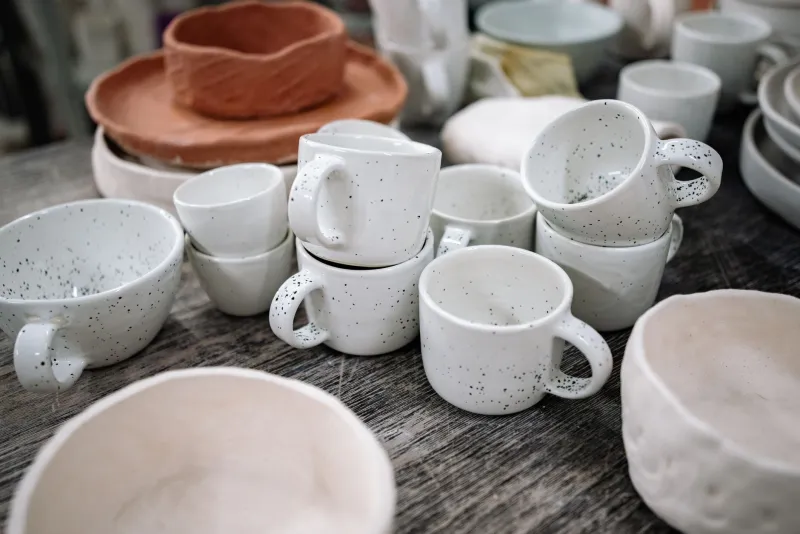
Somewhere between the supermarket aisle and the makers’ market, a quiet argument has been brewing. On one side: a perfectly decent £8 mug that holds tea, survives the dishwasher and matches the plates. On the other: a £28 handmade mug with a slightly wonky handle and a glaze that looks like a November sky. For years, British potters have been told—sometimes politely, sometimes not—that their work is lovely but ‘a bit expensive’. In 2026, more of them are answering back. And honestly? It’s about time.
The high-street mug is not the benchmark
Let’s get the obvious out of the way: a factory mug and a studio mug are not the same product. One is made in enormous batches, fired in efficient gas or electric kilns, priced to sit on a three-for-two shelf and replaced without much thought. The other is made by a person, often in small runs, with all the inconsistency and character that comes with hand work. Comparing them on price alone is like comparing a train ticket with a bicycle. Both get you somewhere, but the economics are completely different.
The trouble is that British shoppers have spent decades being trained to expect cheap ceramics. A mug is a mug, right? But the £8 mug on the high street is not the true cost of pottery—it is the cost of industrial scale. The studio mug carries a different set of numbers, and those numbers have been climbing.
What actually goes into a £28 mug
Take a mid-range handmade mug from a UK potter. Before it reaches your kitchen, there is clay. A decent stoneware body might cost a few pounds per kilo, and a mug might use 400–500g. Then there is glaze, kiln electricity, studio rent, insurance, packaging, card fees, market stall fees, website fees and the odd breakage that never makes it to the shelf. Firing is not free: a kiln is a hungry beast, and energy prices have been volatile enough to make every load feel like a small financial decision. Many potters now fire less often, share kilns, or invest in more efficient equipment simply to keep the lights on.
Then there is time. Throwing, trimming, handle-pulling, glazing and finishing can easily add up to an hour or more per mug—often more for a beginner or for a more complex design. Pay yourself even a modest hourly rate and the mug starts to look different. Add a selling fee if it goes through a gallery or online platform, and the potter’s actual profit can be surprisingly thin. A £28 mug is not a licence to print money. It is often the price of staying in business.
Why drop sales and waiting lists are here to stay
If you have tried to buy from a UK potter recently, you may have noticed that the old model of ‘make a big batch and hope it sells’ is changing. Drop sales—where a maker releases a small collection at a set time—have become common. So have waiting lists, custom slots and ‘seconds’ sales for pieces with minor flaws. These are not just marketing tricks. They are practical ways to manage clay, kiln space, energy costs and the simple fact that a human can only make so many mugs in a week.
Drop sales also help potters avoid the race to the bottom. Instead of endlessly discounting to compete with cheap imports, they can sell fewer pieces at a fair price to people who actually want them. Waiting lists sound exclusive, but they are often just honest: the maker cannot make 100 mugs by Friday, and pretending otherwise leads to burnout. Buyers who understand this tend to get better work and a better relationship with the person who made it.
How to spot fair pricing without losing the joy
You do not need to become an amateur accountant to buy pottery well. Start by asking what is included. Is firing included? Glazing? Is the piece dishwasher-safe, or is it a hand-wash-only treasure? Does the price reflect a one-off or a repeatable design? A simple mug from a production potter may be cheaper than a one-off sculptural piece, and both can be fair.
Look at the maker’s process, not just the finish. If they share photos of kiln shelves, glaze tests, failed batches and studio mess, you are probably dealing with someone who is pricing honestly. Ask about seconds if budget is tight—many potters sell slightly wonky pieces at a lower price, and they are often brilliant. And do not haggle at a market stall. You can absolutely decide a piece is outside your budget, but haggling over a £4 difference rarely reflects the hours behind it.
Most importantly, let yourself enjoy collecting without demanding a bargain every time. One £28 mug that you reach for every morning may bring more joy than four £8 mugs that you barely notice. That is not a luxury argument; it is a value argument. The cheapest mug is not always the one with the lowest price tag—it is the one you actually love using.
The bottom line
British studio pottery is not expensive because potters are greedy. It is expensive because it is made by people, in small numbers, with real materials and real energy costs. In 2026, more makers are charging what their work is worth, and more buyers are starting to understand why. The £8 mug still has its place. But it should not be the ruler by which every handmade mug is measured. Give a potter a fair price and you are not just buying a mug—you are helping keep a craft alive.