The Quiet Hour with Clay: Inside the UK’s Social Prescribing Pottery Sessions
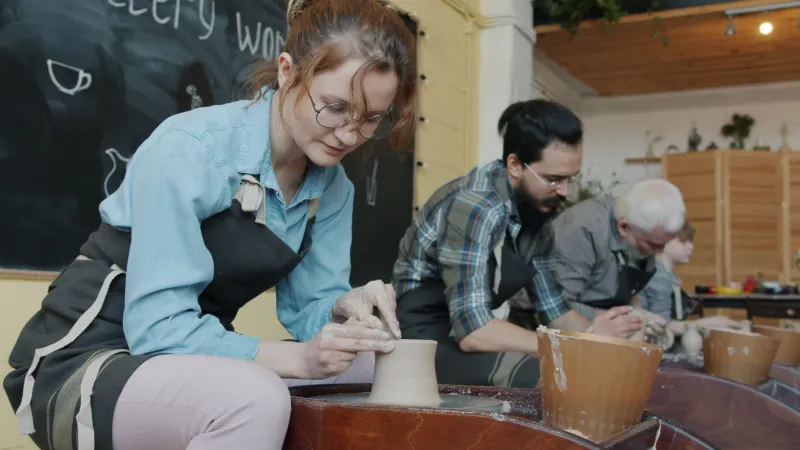
You do not usually leave a GP appointment with clay under your fingernails. But in 2026, a growing number of UK patients are being referred not to another clinic, but to a community pottery studio, church hall or arts centre. The route is social prescribing: a link worker, GP or practice team helps someone find non-clinical support in their area, from walking groups and choirs to, yes, weekly clay sessions.
Pottery is not being prescribed as a cure for anything. It is being offered as a structured, friendly hour away from the things that weigh people down. And for a lot of people, that hour happens to involve a lump of stoneware, a wooden board and a cup of tea.
What social prescribing means at the studio
Social prescribing is not a new idea, but it has become more visible across the UK in recent years. In England, primary care networks and local councils often fund link worker roles. In Wales, Scotland and Northern Ireland, the language and funding routes differ, but the principle is similar: connect people with community activities that support wellbeing, confidence and connection.
A pottery group fits neatly into that model. It is sociable without being demanding. It gives you something to do with your hands. It has a beginning, a middle and an end. And it does not require you to explain your medical history to a room full of strangers.
Referrals can look quite different from place to place. Some groups are funded by a GP surgery or health board and are free to referred participants. Others ask for a small contribution towards materials or firing. Some are run by professional potters, some by community arts organisations, and some by volunteers with a kiln and a lot of patience. The best ones have clear boundaries, a calm tutor and a biscuit tin.
What a referral session actually looks like
Forget the image of a silent studio full of experts. A typical social prescribing pottery session is closer to a friendly workshop than a fine art class. You arrive, you are shown where to hang your coat, and someone puts the kettle on. The tutor explains the plan for the session: often a simple hand-building project such as a pinch pot, a slab tile or a small dish.
There is usually no pressure to use the wheel in week one. Wheels are brilliant, but they are also a quick way to feel clumsy in front of other people. Hand-building is more forgiving. You can chat, or not chat. You can make something wobbly and useful. You can start again. The tutor demonstrates, then moves around the table.
Groups tend to be small, perhaps six to twelve people, and they often run for a fixed block of weeks. Materials are usually included, and the studio handles firing. You might not take anything home on the first day, which is no bad thing. The point is the doing, not the finished object.
Many sessions include a deliberate pause. Some tutors build in ten quiet minutes where nobody has to talk. Others finish with a short check-in. It is not group therapy and it should not pretend to be. It is a craft session with a bit of care built in.
Why clay and company work together
Clay is unusually good at absorbing attention. It has weight, texture and a tendency to do its own thing. That combination can pull you out of your head for a while. You cannot scroll a phone with wet hands. You cannot rush a coil. You have to pay attention to the material, and that can be a relief.
Then there is the company. Loneliness and mild depression often make social contact feel like a performance. A shared table gives people something to look at and something to talk about that is not themselves. You can bond over a collapsing handle or a glaze that looked better in the bucket. That is low-stakes connection, and it counts.
Social prescribing is not a replacement for clinical treatment. The evidence base is mixed, and good schemes are honest about their limits. But many participants describe the same things: a reason to leave the house, a routine, a sense of progress and the rare experience of being in a room without having to justify why they are there.
How to find a pottery group near you
Start with your GP surgery or a local link worker. Ask whether they have a social prescribing team and whether they know of any creative wellbeing groups in the area. You can also try your local council’s social prescribing directory, your library, a community hub or a nearby studio’s noticeboard.
Useful search terms include ‘social prescribing pottery’, ‘creative health ceramics’ and ‘wellbeing pottery group’, along with your town or county. Some schemes allow self-referral, so you do not always need a GP appointment. In Scotland, Wales and Northern Ireland, ask about community link services and local authority arts development teams. The routes are different, but the question is the same: who runs the clay sessions round here?
What to ask before you join
A few practical questions will tell you a lot. Is a referral needed, or can you book directly? Is there a cost, and does it cover materials and firing? Is the venue accessible, with a step-free entrance and an accessible toilet? How many people attend? Is the tutor experienced in working with people who are anxious or isolated? Are there quiet spaces if the room gets busy?
Also ask about the commitment. Some groups run as a six-week course, while others are drop-in. Ask what happens if you miss a week, whether you can try a taster session first, and whether transport support is available. If sensory issues are a factor, ask about gloves, aprons, noise levels and whether the clay is air-drying or kiln-fired.
Finally, ask what the group is and what it is not. A good provider will be clear that it is a craft group, not a therapy session, and will have a plan for signposting people who need more support.
If you run a studio and fancy setting one up
Potters who want to host a social prescribing group do not need to become clinicians. They do need to talk to local link workers, be realistic about capacity, and work out a funding model that does not rely on endless goodwill. Start small, protect the quiet hour, and do not promise more than clay can deliver.
Mud is not medicine in any literal sense. But a warm room, a bit of company and an hour with your hands in clay can be a genuinely good prescription for a grey Tuesday.