Let It Breathe: A Greenware Drying Plan for a Damp British November
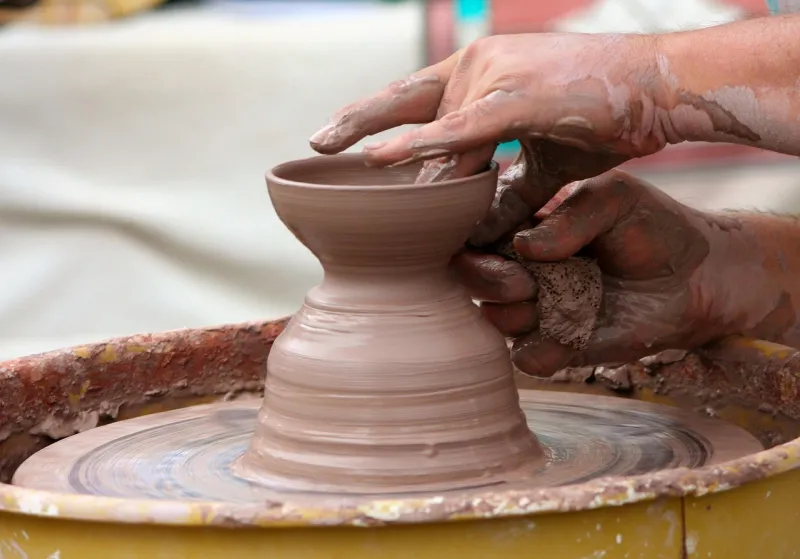
Photo: pottery greenware drying shelves plastic cover studio, via cdn.pixabay.com
November has a particular way of making pottery feel like a waiting game. The heating clicks on, the windows stream with condensation, and the pot you confidently left on the shelf on Friday still feels cool at the base on Monday. Greenware in a British autumn rarely fails dramatically; it sulks, stiffens unevenly and then cracks a week later, usually just after you have told someone it is “nearly dry”.
The fix is not to blast it with heat. It is to slow the whole process down and even it out. That distinction matters in a small UK studio, where the drying shelf might be next to a radiator, under a draughty window or in a garage that never quite loses its chill.
Why November Is Tricky for Greenware
Clay dries by losing water from its surface and then pulling more water outward from inside the piece. If the outside dries much faster than the inside, the surface shrinks while the core stays put. Something has to give, and it is usually a rim, a handle join or the base of a bowl. In damp November weather, the air is often already close to saturated, so pots dry slowly at first. Then the central heating comes on, the room warms up and the surface dries far too quickly. The result is a piece that looks dry on the outside but is still cool and slightly heavy in the middle.
British weather also creates uneven rooms. A shelf near an outside wall is colder than one near a door. A garage floor pulls heat out of a board. A conservatory swings from damp and cold to warm and dry in an afternoon. In 2026, plenty of home potters are working in spare bedrooms, sheds and shared spaces, so the drying plan has to be practical rather than ideal.
Read the Room Before You Read the Pot
A cheap hygrometer is one of the most useful bits of kit you can buy. It will not tell you exactly when a pot is dry, but it will show whether the room is sitting at 75% humidity or 55%. A thermometer helps too. If you can see condensation on the inside of a plastic sheet, the air under that sheet is still doing a lot of work.
Then use your hands. A pot that is drying too fast often feels firm and slightly papery at the rim while the body still feels cool. Handles may stiffen before the belly of the mug. Bases can lift or curl at the edge. Fine hairline cracks may appear at joins, and thin rims can warp before you have even turned your back. If the outside is leather-hard but the inside still feels damp and cold, treat it as a warning sign rather than a finished job.
Tents, Not Torture Chambers
Plastic is your friend, as long as it is not airtight. Drape a sheet of builder’s plastic or an old shower curtain over a shelf and leave gaps at the bottom for air to move. The aim is a gentler microclimate, not a sealed box. Pots should sit on slatted boards, battens or thick card so air can reach underneath. A cold concrete floor will undo a good tent very quickly.
For small pieces, an upside-down plastic storage box with the lid propped open works well. For larger batches, make a simple tent over a shelf and adjust the opening during the week. If one pot is much wetter than the rest, give it its own smaller cover. Handles benefit from a loose plastic collar for the first day or two, especially in a room with central heating.
Air Movement Without the Blast
A fan can help, but not if it is aimed straight at the pots. Use an oscillating fan on its lowest setting, positioned to move air around the room rather than strip moisture from one side of a bowl. A fan heater is a different animal: it creates hot, dry air and uneven drying, which is exactly what November greenware does not need.
Dehumidifiers are useful, but timing matters. Running one continuously from the moment a pot is thrown can case-harden the surface before the inside has caught up. In a damp room, it is often better to wait until pieces are leather-hard, then run the dehumidifier in short bursts with a timer. Keep it away from the shelf and check the hygrometer rather than guessing. A room at a steady 55–65% relative humidity is usually kinder than a room that swings from soggy to desert dry.
The Rotation Schedule
Small studios need a simple drying rota. Label batches with the date and clay type, then move them from the dampest spot to a drier one over several days. Thick-based pieces and sculptural work go at the front of the queue. Mugs and handles stay covered for longer. Once a week, rotate the pots on the shelf so the ones nearest the cold wall are not left there indefinitely.
Try not to handle greenware more than necessary. Every prod and lift is a chance to introduce a crack or a dent. If you need to check a base, slide a board under it rather than picking it up by the rim.
Working With the British Weather, Not Against It
The realistic response to a wet November is to make in smaller batches and build drying time into the making time. A pot thrown on a damp Tuesday may not be ready to trim until Thursday or Friday. That is not a failure of technique; it is the weather doing its thing. Keep an eye on the forecast, but do not wait for perfect conditions that never arrive. Cover, rotate, check and wait.
By the end of the month, the pots that survive will be the ones that were allowed to dry at their own pace. Let them breathe, keep the air moving gently and resist the urge to hurry. November is a slow teacher, but it is a good one.