Colour, Label, Repeat: A Sane Anti-Contamination Routine for Shared Pottery Studios

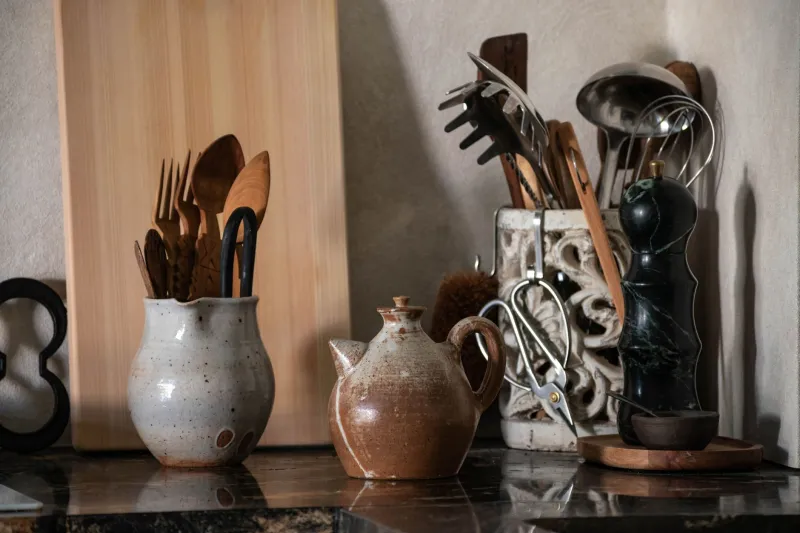
Photo: Martin Cathrae from Charlottetown, PE, Canada, CC BY-SA 2.0, via Wikimedia Commons
There is a particular moment in a shared pottery studio when you realise the sponge has been busier than you thought. You wipe the rim of a bisque-fired mug, trim a bowl, mop the bench, then drop the same damp square into a bucket of glaze. Nothing looks wrong. A week later, a pale glaze has developed a faint blue shadow, or a white slip has picked up a rusty streak. The sponge is not malicious. It is just very good at holding liquid and very bad at keeping secrets.
Why the sponge gets away with it
Sponges are designed to absorb and release water, which is exactly what makes them useful at the wheel and exactly what makes them a contamination risk. A quick rinse under the tap does not neutralise glaze particles, slip or metallic oxides. It just dilutes them enough to look harmless. The same goes for cloths, brushes, ribs and the water bucket that everyone swears they emptied last Tuesday.
The problem is rarely a dramatic spill. It is the small, repeated transfer: a glaze-laden finger to a tap handle, a shared measuring spoon, a sponge that has been in three buckets before lunch. In a home studio, you are the only person to blame. In a shared studio, blame is less useful than a routine that everyone can follow without needing a meeting.
The usual circuit: hands, tools, water, bench
Contamination travels in loops. Start at the glaze bucket, move to the brush, then to the rim of a jug, then to the water pot, then to the sponge, then to the bench, then to your sleeve, then to the next piece of biscuit ware. Biscuit-fired clay is porous, so it absorbs whatever watery mix it meets. That is why a tiny smear of copper glaze can reappear as a speck in a completely different firing.
The obvious suspects are glaze buckets, slip buckets and oxide jars. The less obvious ones are sieves, scales, scoops, turntable heads, splash pans, aprons, towels and the communal sink. If your studio has a shared banding wheel, treat the top as a contaminated surface unless it has just been wiped. If it has a fabric cover, ask when it was last washed.
Colour coding that people actually follow
Most studio colour-coding systems fail because they are too complicated. You do not need a separate colour for every glaze. You need four clear zones: clay and slip, glaze, oxide or stain, and clean water. Keep it simple and visible.
Use coloured electrical tape on tool handles, silicone bands on brushes, or a strip of coloured tape around the rim of each bucket. Choose different-shaped sponges as well as different colours, because colour alone is easy to ignore when you are mid-throw. A large yellow car sponge can live with the clay bucket; a small blue washing-up sponge can be reserved for glazing; a cheap white grouting sponge can be kept for cleaning bisque rims. Label the bucket, not just the tool.
Silicone ribs and plastic scrapers are easier to clean than wooden tools. Brushes are the hardest working offenders in any studio, so give each oxide or stain its own brush and store them bristle-up in a labelled jar. If you use a shared sieve, rinse it in its own bucket and let it dry before it goes back on the shelf.
A wash routine for small spaces
The aim is not hospital-level sterility. It is to stop wet clay and glaze from travelling where they are not wanted. A simple three-stage wash works well: scrape, wash, rinse. Scrape tools and boards into the clay bin first. Wipe down with blue roll or newspaper. Wash in hot soapy water in a dedicated bowl, then rinse in a second bowl. Dry everything before it goes back into storage. A damp tool cupboard is just a contamination incubator with shelves.
Do not pour clay or glaze sludge down the sink. In the UK, small studios and home potters should let buckets settle overnight, decant the clear water, and dispose of the solids in the bin. A sink trap or settling bucket is worth the outlay if you clean tools indoors. Keep a separate washing-up bowl for hands and another for tools, and change the water before it turns into grey soup.
Shared studio etiquette: kind but firm
Shared spaces run on small courtesies. Ask before borrowing a sponge, brush or bucket. Return tools clean and dry. Keep personal kit in a labelled caddy if the studio allows it. Never use the communal sponge on biscuit ware unless it has been rinsed and dried for that purpose. Cover glaze buckets when they are not in use, and wipe the wheel head and splash pan before you leave.
A short, friendly sign above the sink does more than a lecture. Something like: rinse tools in the blue bowl, not the sink; sponges stay with their colour; glaze buckets get lids. If a mystery bucket appears, label it or ask. If a sponge looks like it has been used to clean a car, bin it. Shared studios are not a court, but they do need a few clear rules.
UK kit that does the job without the fuss
You do not need specialist gear for this. Supermarkets and hardware shops sell colour-coded washing-up bowls, spray bottles, plastic trays and lidded storage boxes. Homebrew shops are good for food-grade buckets and lids. Trade counters sell blue roll in bulk. Pottery suppliers such as Scarva, Bath Potters and Potclays stock proper glaze buckets, sieves and mixing containers if you want kit that is built for the job.
A cheap label maker is a better investment than another glaze. Use it on buckets, jars, brush pots and storage boxes. A small plastic dish rack keeps sponges and brushes off the bench and allows them to dry. A lidded caddy keeps your personal tools separate from the communal drawer of mystery.
The ten-minute reset
End each session with a ten-minute reset: scrape, wash, rinse, dry, label. Once a month, empty the water buckets, scrub the sink area, wash the aprons and towels, and check that the colour coding still makes sense. A studio does not need to be spotless to be safe and productive. It just needs a routine that stops the same sponge from quietly carrying cobalt into the stoneware glaze.
The humble studio sponge is not evil. It is just an enthusiastic messenger. Give it one job, one colour and one home, and your glazes will be truer for it.