Drawer Raid: The Kitchen Utensils That Genuinely Earn Their Keep at the Pottery Bench
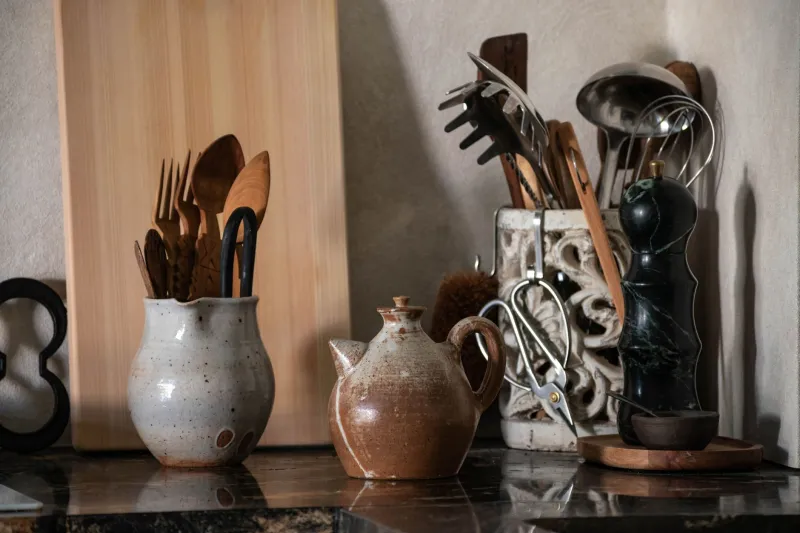
At The Clay Hub, we are not anti-specialist kit. A needle tool that does not bend, a cutting wire that does not ping across the studio, and a rib you actually enjoy holding are all worth paying for. But before you add another single-purpose £30 gadget to the basket, it is worth asking a quietly subversive question: could the thing already in the kitchen drawer do the same job for £3?
That is not a licence to raid the best cutlery. It is an invitation to test a few ordinary utensils against proper pottery tools, with a sharp eye on wear, safety and the point where false economy starts costing clay.
The house rules before you start
Keep a separate clay-only box. Once a fork, brush or icing smoother has touched clay, it should not go back into the food drawer. Clay dust is not something to move around the kitchen, and neither are glaze residues. If you are using metal, check for rust. If you are using plastic, check for cracks and fraying. If you are using wood, accept that it will dry out, stain and eventually split. None of this is exotic health and safety theatre; it is just sensible studio hygiene.
Also: do not use your good knives, do not use non-stick pans as moulds, and do not put clay-covered tools in the dishwasher. A dedicated £3 utensil from a charity shop or homeware store is a bargain. A ruined £40 knife is not.
Fork versus needle tool
A dinner fork is the classic drawer-raid candidate. The tines will score a slab, drag texture through soft clay and make a passable set of hatching lines for joins. On a broad, rough surface it is genuinely quick: three or four passes and you have a keyed area ready for slip.
A needle tool still wins on precision. It scores fine lines, pierces air holes, checks wall thickness and gets into the awkward inside corners where a fork simply cannot go. Fork tines also bend, especially if you lean on them, and the handle can be surprisingly uncomfortable after twenty minutes.
Verdict: keep an old fork for coarse scoring and texture. Buy the needle tool for anything that needs accuracy. This is a draw, not a knockout.
Chopsticks versus wooden modelling tools
Bamboo chopsticks are brilliant cheap studio consumables. They poke holes in beads, open up small forms, support handles while they dry, stir small amounts of slip and can be sharpened to a point with sandpaper. A pair costs pennies; a single wooden modelling tool can cost £6 or more.
The catch is that bamboo is soft. It will splinter, stain and lose its point. It is not a replacement for a good wooden rib or a metal loop tool, and it should not be used to lever or pry anything.
Verdict: a genuine bargain for poking, propping and stirring. Not a precision carving tool.
Icing smoother versus rubber rib
This is the test where the kitchen drawer genuinely earns its keep. A plastic icing smoother — the kind sold for £2 or £3 in baking aisles — is essentially a flexible plastic scraper. It smooths slab edges, compresses rims, cleans up leather-hard joins and burnishes small areas.
It will not replace a proper throwing rib. It is too flexible for serious shaping on the wheel, and it lacks the stiffness you want when you are compressing a tall cylinder. But for hand-building and finishing, it is remarkably useful. Keep one in the clay box and save your best rib for the wheel.
Verdict: the £3 tool that beats a £30 gadget for the jobs most hobbyists actually do. Strong win.
Garlic press and lemon squeezer: the novelty round
A garlic press can act as a mini extruder for very soft clay, producing thin coils for handles, hair or surface decoration. It is fun for about ten minutes. Then the hinge starts to strain, clay dries in the barrel, and you realise you have invented a difficult-to-clean toy. If you want to try it, buy a cheap second-hand press and keep it clay-only. Do not use the family one.
A lemon squeezer is similarly tempting as a press mould for shallow dishes or spoon rests. It can work as a hump mould if you line it carefully and use a release agent, but the metal edges and awkward shape make it more fuss than it is worth for most people.
Verdict: occasionally useful, mostly novelty. Spend the money on a proper extruder only if you make handles in volume.
When to stop raiding the drawer
Some jobs deserve real kit. A needle tool, a cutting wire, a rib you like and a decent set of scales are not glamorous, but they are the tools you will use every session. A properly fitted respirator and a good apron matter more than any gadget. If you are making production work, a dedicated extruder or a proper wedging board will pay for itself far faster than a garlic press ever will.
The kitchen drawer is a good place to start, not a permanent replacement for everything. Test the £3 option, keep it clean, keep it separate, and spend your money where precision and safety actually matter.
At The Clay Hub, we are all for getting your hands dirty. We are less keen on getting your dinner fork muddy.