The Chameleon Tub: Why Your Go-To Glaze Keeps Changing Its Mind
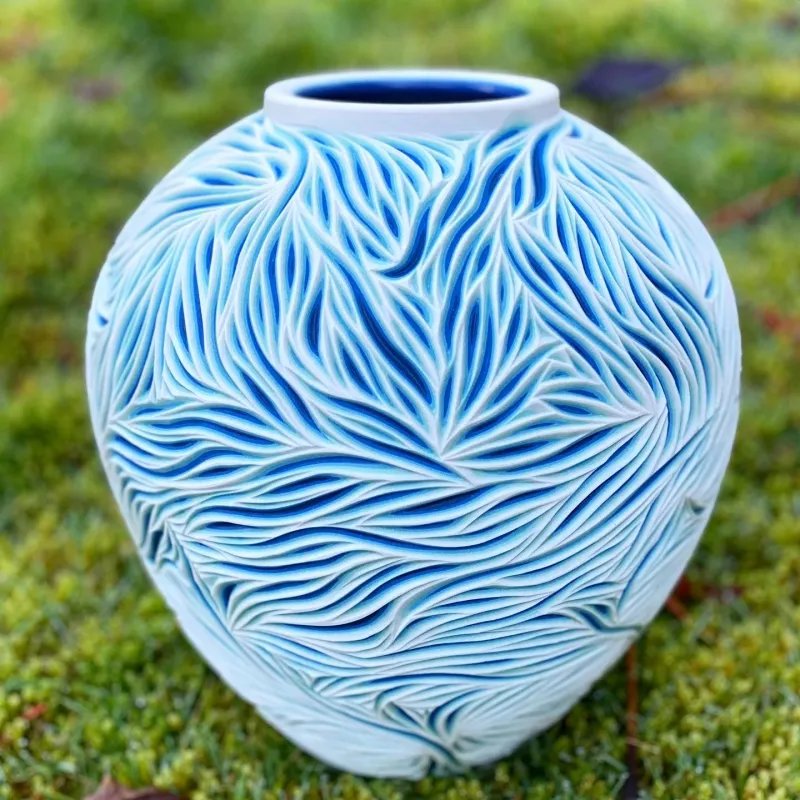
Photo: ceramic glaze test tiles labelled pottery studio UK, via i.pinimg.com
There’s a particular kind of pottery betrayal that happens quietly on the shelf. You reach for the glaze you’ve used for months — the one that came out of the kiln as a deep, reliable studio blue — and this time it’s greener. Or paler. Or slightly speckled in a way it definitely wasn’t before. The label is identical. The tub looks the same. So what happened?
Welcome to commercial glaze batch variation, the unglamorous reality behind even the most dependable-looking tub. It doesn’t mean your supplier is being shady, and it doesn’t mean you’ve done anything wrong. It does mean that if you care about repeatable colour — for a set of mugs, a commission, or a class project — you need a bit of consumer savvy and a decent test-tile habit.
Same label, different personality
Commercial glazes are not mixed in a laboratory vacuum. They’re blends of clays, frits, oxides, stains and other raw materials, and those materials can shift from one delivery to the next. A supplier might adjust a recipe because a raw material has become harder to source, because a batch of frit behaves slightly differently, or because a formulation is being updated for safety or performance. Even when the recipe stays the same, the physical stuff inside the tub can vary: particle size after milling, how much the glaze settles in storage, how it responds to a bit of winter cold in a draughty studio.
In the UK, hobby potters often buy smaller tubs from shops, community studios or online suppliers who decant from larger containers. That means the batch code on your tub might not match the batch code on the shelf next month. It’s not unusual for a popular ready-mixed glaze to arrive in several batches a year, especially if it’s made by a smaller British producer or imported and repackaged by a distributor.
The result is that two pots dipped in the same named glaze, fired in the same kiln, can come out looking like distant cousins rather than twins. Sometimes the difference is subtle enough to ignore. Sometimes it’s the difference between ‘That’ll do’ and ‘That is not the colour I promised.’
What actually changes between tubs
Several things can nudge a commercial glaze off course. Raw material variation is the big one: cobalt can vary in strength, copper can shift from green to red depending on firing conditions, rutile can change speckle and flow, and stains are not always perfectly consistent. Milling matters too — a finer grind can melt differently from a coarser one. Specific gravity is another quiet culprit. A tub that has settled in storage, or been diluted by a shop that tops up containers, will apply a thinner coat and fire lighter.
Then there’s firing. The same glaze on the same clay in the same kiln can look different depending on cone reached, soak time, cooling rate, and where the pot sat in the chamber. A slow cool can bring out crystals and colour development that a fast cool won’t. A shared kiln loaded with lots of thermal mass can behave differently from a nearly empty one. And if you’ve switched clay bodies — even within the same supplier’s range — the glaze may react differently with the underlying clay.
Finally, supplier reformulation happens. A glaze might be tweaked to remove a problematic ingredient, improve brushability, or compensate for a raw material that’s no longer available in the same form. Some suppliers publish batch notes and formulation changes; others don’t. It’s always worth asking.
The test tile habit that saves kiln loads
If you only do one thing after reading this, make it this: test tiles. Not because they’re exciting, but because they’re cheaper than ruining a whole load of Christmas presents.
Use the same clay body you’ll use for the real pots. Apply the glaze at the same thickness you plan to use — count your dips, or brush the same number of coats. Fire the tiles in the same kiln and, ideally, the same firing schedule as your final work. Label each tile with the glaze name, batch code, supplier, date, specific gravity if you’ve measured it, application method, and firing programme. Keep them in a box or on a board as a tile library. Photograph them in daylight, not under studio strip lights, so you’ve got a visual record that isn’t flattering the colour.
A simple notebook or spreadsheet works fine. The point is to create a paper trail. When a glaze suddenly looks wrong, you can check whether you’ve changed clay, firing schedule, application thickness, or batch. Often you’ll find the answer in your own notes before you blame the supplier.
Questions to ask your UK supplier
Being a savvy buyer doesn’t mean being difficult. Most UK ceramic suppliers are happy to talk about batch variation if you ask clearly. Useful questions include: What batch code is on this tub? Has the formulation changed since a particular date? What firing range and soak do you recommend? What specific gravity should I aim for? Can I buy a small sample from the same batch before committing to a larger tub? Do you publish batch notes or reformulation notices?
If you’re buying from a shop or a community studio that decants glaze, ask when the tub was filled and whether it’s from the same batch as the last one you bought. If you need consistency for a set, buy enough from one batch to finish the project. Store it properly, keep the lid sealed, and label it clearly. Don’t mix old and new batches unless you’re deliberately chasing a blended look — and if you do, test it first.
When the whole kiln is at stake
Batch variation is part of ceramics. It can be a feature, not a bug: a little shift in colour can make handmade work feel alive. But if you’re making a matching set, teaching a class, or fulfilling a commission, treat every new tub as an unknown until you’ve tested it. One or two test tiles are a small price to pay for a kiln load you’re proud to unload.
And if the colour does shift? Record it, photograph it, and decide whether to embrace it or switch batches. The chameleon tub isn’t going anywhere. Your best defence is a labelled tile, a scruffy notebook, and the confidence to ask your supplier a straightforward question.